Manual.ly Logo

Philips One by Sonicare HY1200/05 Mode-D-Emploi

0,0 · 0 Notes

Manuel PDF · 2 Pages

Français

M: OA-GPT-5-NAN
page

/ 2

Loading...
53fb4cb08b2d07c8dfc42d400ff98d989d01 page 1
One
HY1200
1
2
3
4
5
9
8
6
7
2
4
3
1
- Do not burn the toothbrush handle and its
battery and do not expose them to direct sunlight
or to high temperatures (e.g. in hot cars or near
hot stoves). Batteries may explode if overheated.
- If the product becomes abnormally hot, gives o
an abnormal smell, changes color or if charging
takes much longer than usual, stop using and
charging the product and contact your local
Philips dealer.
- Do not place the toothbrush handle and its
battery inside microwave ovens or on induction
cookers.
- This product contains a rechargeable battery that
is non-replaceable. Do not open the toothbrush
handle to replace the rechargeable battery.
- When you handle the battery to remove them
during nal product disposal, make sure that
your hands, the product and the battery are dry.
- To prevent the battery from heating up or
releasing toxic or hazardous substances, do not
modify, pierce or damage the toothbrush handle
and battery, and do not disassemble, short
circuit, overcharge or reverse charge the battery.
- To avoid accidental short-circuiting of the
battery after removal, do not let battery terminals
come into contact with metal object (e.g. coins,
hairpins, rings). Do not wrap the battery in
aluminum foil. Tape battery terminals or put the
battery in a plastic bag before you discard it.
- If the battery is damaged or leaking, avoid
contact with the skin or eyes. If this occurs,
immediately rinse well with water and seek
medical care.
SAVE THESE
INSTRUCTIONS
Electromagnetic elds (EMF)
This Philips appliance complies with all applicable
standards and regulations regarding exposure to
electromagnetic elds.
Introduction
Congratulations on your purchase and welcome
to Philips! To fully benet from the support
that Philips oers, register your product at
www.philips.com/welcome.
Intended use
Philips One power toothbrushes are intended to
remove adherent plaque and food debris from
the teeth to reduce tooth decay and improve
and maintain oral health. Philips One power
toothbrushes are intended for consumer home use.
Use by children should be with adult supervision.
Your Philips One (Fig. 1)
1 Travel case lid
2 Travel case
3 Brush head
4 Handle
5 Power Button
6 Battery light indicator
7 End cap
8 USB-C charging port
9 USB-C charging cable
Getting started
Attaching the brush head
1 Align the brush head so the bristles point in the
same direction as the front of the handle. Press
the brush head down onto the metal shaft (Fig. 2).
Note: It is normal to see a slight gap between the
brush head and the handle (Fig. 3). This allows the
brush head to vibrate properly.
Charging your Philips One
1 Open the end cap at the bottom of the toothbrush
handle (Fig. 4) and plug the USB-C charging cable
into the USB-C charging port (Fig. 5).
2 Connect the USB cable into a 5V USB wall
adapter (Type A).
Note: Wall adapter not included. Only use 5V
IPX-4 adapter (Type A).
3 Your Philips One beeps twice to indicate that the
toothbrush is charging.
4 Your toothbrush continues to charge until it is
fully charged.
- When the toothbrush is charging, the battery
indicator fades up and down in white.
- When fully charged, the battery indicator
lights up solid white and turns o after
30 seconds of being fully charged.
Note: It can take up to 8 hours to fully charge the
battery, but you can use the toothbrush before it
is fully charged.
When not charging your Philips One, be sure the
end cap is securely closed.
Travel case
Your Philips One comes with a travel case to store your
power toothbrush when traveling or between uses.
Put your Philips One toothbrush in the travel case
with the bristles facing downwards. Snap close the
lid of the travel case.
To remove your Philips One toothbrush in the travel
case, follow these steps:
1 Flip open the travel case lid.
2 While holding both ends of the travel case, pinch
the base of the toothbrush (Fig. 6).
3 The toothbrush will raise. Lift the toothbrush.
Using your Philips One toothbrush
If you are using this toothbrush for the rst time,
it is normal to feel more vibration than when
using a manual toothbrush. The Philips One uses
microvibrations to help gently clean your teeth.
Please follow the brushing instructions below for
the best experience.
Philips One comes with a SmarTimer and QuadPacer
to help you brush evenly throughout your mouth.
SmarTimer
The SmarTimer indicates that your 2-minute
brushing cycle is complete by beeping 3 times and
automatically turning o.
Note: Dental professionals recommend brushing no
less than 2 minutes twice a day.
QuadPacer
The QuadPacer is an interval timer that beeps every
30 seconds to remind you to brush all teeth evenly
by dividing your mouth into 4 sections (Fig. 7).
Begin brushing in section 1 (outside upper teeth) and
brush for 30 seconds before you move to section 2
(inside upper teeth). Continue brushing in section 3
(outside lower teeth) and brush for 30 seconds
before you move to section 4 (inside lower teeth).
Note: If you press the power button after you started
the brushing cycle, the toothbrush will pause. After a
pause of 30 seconds, the SmarTimer and QuadPacer
reset.
Brushing instructions
Please follow the brushing instructions for the best
experience.
1 Wet the bristles and apply a small amount of
toothpaste.
2 Place the toothbrush bristles against the teeth
at a slight angle (45 degrees) (Fig. 8), pressing
gently to make the bristles reach the gumline or
slightly beneath the gumline.
Note: The bristles should slightly are.
3 Press the power button to turn on the toothbrush.
4 Brush your teeth with back and forth strokes so
that the bristles reach all surfaces of the teeth.
Change to another section when the QuadPacer
beeps. Continue this motion throughout the
2-minute brushing cycle.
5 To clean the inside surfaces of the front teeth, tilt
the brush vertically and make several up-and-
down strokes (Fig. 9).
6 After you have completed the brushing cycle,
you can spend additional time brushing the
chewing surfaces of your teeth and areas where
staining occurs (Fig. 10). You can also brush your
tongue, with the toothbrush turned on or o, as
you prefer.
Your power toothbrush should be safe to use on
braces (brush heads wear out sooner when used
on braces) and dental restorations (llings, crowns,
veneers) if they are properly adhered and not
compromised. If a problem occurs, please follow up
with a dental professional.
Battery status
This Philips One toothbrush is designed to provide
at least 60 brushing sessions after it has been fully
charged for 8 hours. This allows sucient charge
for 1 month‘s usage if you brush 2 times a day (each
session lasting 2 minutes).
When the battery light indicator ashes amber it
is time to charge your Philips One (see chapter
Charging your Philips One). The table below
species the battery states:
Number of
brushings
remaining
Battery
indicator
Beep sound
40-60
brushings
White- solid -
7-39 brushings White- fades
up and down
-
≤6 brushings Amber-
ashing
5 beeps after
brushing
0 brushings
remain
Amber-
ashing
5 beeps x 2
English
IMPORTANT
SAFEGUARDS
READ ALL INSTRUCTIONS BEFORE USE
When using electrical products, especially when
children are present, basic safety precautions
should always be followed, including the following:
DANGERS
To reduce the risk of electrocution:
- Do not place or store product where it can fall or
be pulled into a tub or sink.
- Do not place in or drop into water or other liquid.
- Do not use while bathing.
- Do not reach for a product that has fallen into
water. Unplug immediately.
- After cleaning, make sure the toothbrush handle
is completely dry before you connect it to the
mains.
WARNINGS
To reduce the risk of burns, electrocution, re or
injury to persons:
- Charge only with Philips HX9200 or any
UL approved adapters with input ratings
(100-240 V~; 50/60 Hz; 3,5W) and output
ratings (5Vdc; 2.5W). For the list of adapters,
please see Philips.com/support.
- Discontinue use if this product appears damaged
in any way (brush head, handle, travel case,
and/or USB cable). This product contains no
serviceable parts. Refer to chapter ‘Warranty
and support’ if your Philips One no longer works
properly or needs repair.
- This product is designed to clean your teeth,
gums and tongue only. Use this product only
for its intended use as described in this user
manual. Discontinue use of this product and
contact a physician/dentist if discomfort or pain
is experienced.
- This product may be used by children and
persons with reduced physical, sensory or
mental capabilities, or lack of experience and
knowledge, if they have been given supervision
or instruction concerning the safe use of the
appliance and understand the hazards involved.
Cleaning and user maintenance shall not be
made by children without supervision.
- Children shall not play with the product.
- Do not use attachments other than those
recommended by Philips.
- To avoid damage to the product, do not place
the brush head, handle and/or travel case in the
dishwasher for cleaning.
- Keep cord away from heated surfaces.
- Do not charge the product outdoors.
- Do not use the product if dropped into water.
- Close end cap of handle at all times if not
charging to prevent damage caused by water
ingress.
- USB cable should be dried after any contact with
water to prevent oxidation.
MEDICAL WARNINGS
- Consult your dental professional before you use
this product if you have had oral or gum surgery
in the previous 2 months.
- Contact your dental professional if excessive
bleeding occurs after using this product or
bleeding continues to occur after 1 week of use.
- If you have a pacemaker or other implanted
device contact your physician or the device
manufacturer prior to use.
- This product has been tested and is compliant
with safety standards for electromagnetic
devices.
- Consult your physician prior to using the product
if you have medical concerns.
BATTERY SAFETY
INSTRUCTIONS
- Only use this toothbrush for its intended purpose
and follow the general and battery safety
instructions as described in this user manual. Any
misuse can cause electric shock, burns, re and
other hazards or injuries.
- Charge, use and store the product at a
temperature between 5 °C and 35 °C.
- To charge the battery, only use the USB cable
provided with the product. Do not use an
extension cord.
Note: When the battery is completely empty, the
toothbrush turns o. The toothbrush will not turn on
until battery is recharged. Toothbrush does not turn
on while charging.
Note: Battery usage time is expected to reduce over
product lifetime.
Cleaning
You should clean your toothbrush and accessories
regularly to remove toothpaste and other residue.
Failure to clean your product may result in an
unhygienic product and damage to it may occur.
Warning: Do not clean product or accessories in
dishwasher, microwave, with chemicals or with
boiling hot water.
Toothbrush handle
1 Remove the brush head and rinse the metal shaft
area with warm water (Fig. 11). Make sure you
remove any residual toothpaste.
2 Wipe the entire surface of the handle with a
damp cloth.
Note: Do not tap the handle on the sink to remove
excess water.
Cleaning brush head
1 Rinse the brush head and bristles after each use.
2 Remove the brush head from the handle and
rinse the brush head connection with warm water
at least once a week.
Cleaning travel case
Rinse the travel case weekly with warm water and
wipe clean with a damp cloth.
Cleaning USB charging cable and port
1 Use compressed air to clean the USB port on the
toothbrush handle and connector on the USB
charging cable.
2 Use a slightly dampened cloth to wipe the cable
Note: Avoid contact of the USB port and connections
with water. If contact occurs, dry immediately.
Storage
If you are not going to use the product for a long
time, clean it (see ‚Cleaning‘), charge it fully, and
store it in a cool and dry place away from direct
sunlight.
Replacement
Brush head
Replace the brush heads every 3 months to achieve
optimal results. Only Philips One brush heads are
compatible with Philips One.
Locating the model number
Remove brush head from handle. Look at the top
of the handle near the metal shaft for the model
number (HY120X).
Warranty and support
Philips warrants this product for one year
after the date of purchase. For questions, call
1-800-682-7664 or visit www.philips.com/support.
Philips recommends use of genuine Sonicare brush
heads for optimal performance. Use of other brush
heads may damage your Sonicare toothbrush and
limit your warranty protection.
Warranty restrictions
The terms of the international warranty do not cover
the following:
- Brush heads.
- Replacement batteries.
- Damage caused by use of unauthorized
replacement parts.
- Damage caused by misuse, abuse, neglect,
alterations or unauthorized repair.
- Normal wear and tear, including chips, scratches,
abrasions, discoloration or fading.
Disposal
- This product contains a rechargeable nickel
metal hydride battery which must be disposed of
properly (Fig. 12).
- Contact your local town or city ocials for
battery disposal information You can also call
1-800-822-8837 or visit www.call2recycle.org for
battery drop o locations.
- Your product is designed and manufactured
with high quality materials and components,
which can be recycled and reused. For
recycling information, please contact your
local waste management facilities or visit
www.recycle.philips.com.
- This product contains batteries:
- Dispose of batteries properly. Do not
incinerate. Batteries may explode if
overheated.
- Do not wrap in metal or aluminum foil. Tape
the waste battery terminals before discarding.
- It is suggested that you contact your local
town or city to determine proper battery
redemption site(s) in your area. To remove the
battery, follow the instructions in Removing
the rechargeable battery chapter.
Removing the rechargeable battery
The rechargeable battery inside your Philips One
cannot be replaced, but is easy to remove for
recycling. At the end of product life and prior to
disposal, please remove the rechargeable battery
from the handle by following the instructions below.
Warning: Only remove the rechargeable battery
when you discard the appliance. Make sure the
battery is completely empty when you remove it.
Warning: Please note that this process is not
reversible.
To remove the rechargeable battery, you need wire
cutters/scissors and a screwdriver. Observe basic
safety precautions when you follow the procedure
outlined below. Be sure to protect your eyes, hands,
ngers, and the surface on which you work.
1 To deplete the rechargeable battery of any
charge, remove the handle from the USB cable,
turn on the Philips One toothbrush and let it run
until it stops. Repeat this step until you can no
longer turn on the Philips One toothbrush.
2 Remove and discard the brush head.
3 Open the end cap and cut the tether with
scissors to separate the end cap (Fig. 13).
You can discard this piece.
4 Drop the handle vertically (with the USB port
facing downwards) onto a hard surface from
approximately 6.5ft (2m) (Fig. 14).
Note: You may have to drop the handle on
its end several times to loosen the internal
components.
5 The internal structure will become dislodged
(Fig. 14). If the internals have not been exposed,
repeat step 5.
6 Use a screwdriver to push the internal bracket
out of the handle (Fig. 15, Fig. 16).
7 Once the internal components have been
removed, locate the wire and steel plate that are
in contact with the battery. Cut the steel plate
and battery wire from the circuit board close
to the battery (Fig. 17, Fig. 18).
Caution: Be aware of any sharp edges to avoid
injury to your ngers
8 Grab the battery and pull it out of the internal
structure (Fig. 19).
9 Cover the battery contacts with tape to prevent
any electrical short from residual battery charge.
The rechargeable battery can now be recycled and
the rest of the product discarded appropriately.
Español
PRECAUCIONES
IMPORTANTES
LEA TODAS LAS INSTRUCCIONES ANTES DE
USARLO
Cuando use productos eléctricos, especialmente
cuando los niños están presentes, se debe seguir las
precauciones básicas, incluyendo las siguientes:
PELIGROS
Para reducir el riesgo de electrocución:
- No coloque ni guarde el producto en un sitio desde
donde pueda caer a una bañera o un lavabo.
- No lo coloque ni lo sumerja en agua ni ningún
otro líquido.
- No lo utilice mientras se baña.
- No intente recoger un producto que haya caído
al agua. Desenchúfelo inmediatamente.
- Después de limpiarlo, asegúrese de que el
mango del cepillo dental esté completamente
seco antes de conectarlo a la red eléctrica.
ADVERTENCIAS
Para reducir el riesgo de quemaduras, electrocución,
incendio o lesiones en personas:
- Use solamente el cargador Philips HX9200
o cualquier adaptador UL aprobado con
clasicaciones de entrada (100-240 V ~;
50/60 Hz; 3.5W) y de salida (5Vdc; 2.5W).
Para ver la lista de adaptadores, visite
Philips.com/support.
- Deje de utilizar este producto si parece estar
dañado de cualquier manera (cabezal del
cepillo, mango, estuche de viaje o cable USB).
Este producto no contiene piezas que no son
reemplazables. Si su Philips One no funciona
correctamente o necesita reparación, consulte el
capítulo „Garantía y asistencia“.
- Este producto está diseñado para limpiar sólo
los dientes, las encías y la lengua. Utilice este
producto solo para el uso previsto tal como se
describe en este manual del usuario. Deje de
utilizar este producto y consulte a un médico o
dentista si experimenta algún tipo de dolor o
molestia.
- Este producto lo pueden utilizar niños y
personas con capacidad física, mental o
sensorial reducida y por quienes no tengan los
conocimientos ni experiencia necesarios, si se
les supervisa o se les instruye acerca del uso
seguro del aparato y si saben los riesgos que
conlleva su uso. El mantenimiento del usuario y
la limpieza no deben ser realizados por un niño
sin supervisión.
- Los niños no deben jugar con el producto.
- No use accesorios distintos a los recomendados
por Philips.
- Para evitar dañar el producto, no coloque el
cabezal del cepillo, el mango ni el estuche de
viaje en el lavavajillas para limpiarlos.
- Mantenga el cable lejos de supercies calientes.
- No cargue el producto al aire libre.
- No utilice el producto si se cae al agua.
- Mantenga cerrada la tapa del mango en todo
momento en que no se esté cargando a n de
prevenir daños causados por la entrada de agua.
- El cable USB se debe secar después de cualquier
contacto con el agua para prevenir la oxidación.
ADVERTENCIAS
MÉDICAS
- Consulte a su dentista o higienista dental antes
de utilizar este producto si le han practicado
cirugía oral o de las encías en los 2 últimos meses.
- Consulte a su dentista o higienista dental si
se produce un sangrado excesivo después de
usar este producto o si el sangrado continúa
produciéndose después de 1 semana de uso.
- Si tiene un marcapasos o cualquier otro dispositivo
implantado, consulte a su médico o al fabricante
del dispositivo antes de utilizar el aparato.
- Este producto ha sido probado y cumple con
los estándares de seguridad para dispositivos
electromagnéticos.
- Consulte a su médico antes de utilizar el
producto si tiene alguna preocupación médica.
INSTRUCCIONES DE
SEGURIDAD DE LA
BATERÍA
- Utilice este cepillo dental solo para el uso
previsto y siga las instrucciones de seguridad
generales y de la batería tal como se
describe en este manual del usuario. Todo
uso inapropiado puede provocar descargas
eléctricas, quemaduras, incendios y otros riesgos
inesperados o lesiones.
- Cargue, utilice y guarde el producto a una
temperatura entre 5 °C y 35 °C.
- Para cargar la batería, solo use el cable USB
suministrado junto con el producto. No use un
cable de extensión.
- No queme el mango ni la batería del cepillo
dental y no los exponga directamente a la luz
solar ni a altas temperaturas (p. ej., dentro
de automóviles calientes o cerca de estufas
calientes). Las baterias pueden explotar si son
sobre calentadas.
- Si el producto se pone anormalmente caliente,
despide un olor anormal, cambia de color o tarda
mucho más tiempo de lo normal en cargarse,
deje de usarlo y de cargarlo, y comuníquese con
el distribuidor de Philips de su localidad.
- No coloque el mango ni la batería del cepillo
dental en hornos microondas ni en ollas de
inducción.
- Este producto contiene una batería recargable
que no es reemplazable. No abra el mango
del cepillo dental para reemplazar la batería
recargable.
- Cuando manipule la batería para extraerla
durante el desecho nal del producto, asegúrese
de hacerlo con las manos, el producto y la
batería secos.
- Para prevenir que la batería se caliente o libere
sustancias tóxicas o peligrosas, no modique,
perfore ni dañe el mango ni la batería del cepillo
dental y no desarme, ponga en cortocircuito o
sobrecargue la batería ni realice cargas inversas.
- Para evitar un cortocircuito accidental en la
batería después de la extracción, no permita
que los terminales de las baterías entren en
contacto con objetos metálicos (p. ej., monedas,
horquillas, anillos). No envuelva la batería en
papel de aluminio. Cubra los terminales de la
batería con cinta o coloque la batería en una
1.5~2.5 m
2
1
5
8
11
14
17
3
6
9
12
15
18 19
4
7
10
13
16
bolsa de plástico antes de desecharla.
- Si la batería se daña o tiene fugas, evite el
contacto con la piel o los ojos. Si esto sucede,
enjuague bien inmediatamente con agua y
busque atención médica.
CONSERVE ESTAS
INSTRUCCIONES
Campos electromagnéticos (CEM)
Este aparato de Philips cumple los estándares y las
normativas aplicables sobre exposición a campos
electromagnéticos.
Introducción
Enhorabuena por la adquisición de este producto,
y bienvenido a Philips. Para sacar el mayor partido
a la asistencia que Philips le ofrece, registre el
producto en www.philips.com/welcome.
Uso previsto
Los cepillos dentales eléctricos Philips One están
diseñados para eliminar la placa pegada y los
residuos de comida de los dientes para reducir
las caries dentales, y mejorar y mantener la salud
bucal. Los cepillos dentales eléctricos Philips One
están diseñados para el uso en el hogar. Los niños
siempre deben utilizar estos productos bajo la
supervisión de un adulto.
Su Philips One (Fig. 1)
1 Tapa del estuche de viaje
2 Estuche de viaje
3 Cabezal de cepillado
4 Mango
5 Botón de encendido
6 Indicador de batería con luz
7 Tapa
8 Puerto de carga USB-C
9 Cable de carga USB-C
Antes de empezar
Cómo jar el cabezal del cepillo
1 Alinee el cabezal del cepillo de manera que las
cerdas apunten en la misma dirección que la
parte frontal del mango. Presione rmemente
hacia abajo el cabezal del cepillo sobre el eje
(Fig. 2) metálico.
Nota: Es normal ver una ligera abertura entre el
cabezal del cepillo y el mango (Fig. 3). Esto permite
que el cabezal del cepillo vibre de forma adecuada.
Cómo cargar el Philips One
1 Abra la tapa en la parte inferior del mango
(Fig. 4) del cepillo dental y conecte el cable de
carga USB-C al puerto (Fig. 5) de carga USB-C.
2 Conecte el cable USB a un adaptador de
pared USB de 5 V (tipo A).
Nota: El adaptador de pared no está incluido.
Utilice solamente un adaptador IPX-4 de 5 V
(tipo A).
3 El Philips One emite dos pitidos para indicar que
el cepillo dental se está cargando.
4 El cepillo dental se seguirá cargando hasta que
la batería esté completa.
- Cuando el cepillo dental se está cargando, el
indicador de batería titila con una luz blanca.
- Cuando la batería está totalmente cargada,
el indicador de batería se ilumina con una
luz blanca constante y se apaga 30 segundos
después de que se completa la carga.
Nota: La batería puede demorar hasta 8 horas en
cargarse totalmente, pero puede usar el cepillo
dental antes de que se complete la carga.
Cuando no esté cargando el Philips One,
asegúrese de que la tapa esté bien cerrada.
Estuche de viaje
El Philips One viene con un estuche para guardar el
cepillo dental eléctrico cuando viaje o entre cada uso.
Coloque el cepillo dental Philips One en el estuche
de viaje con las cerdas hacia abajo. Cierre a presión
la tapa del estuche de viaje.
Para sacar el cepillo dental Philips One del estuche
de viaje, siga estos pasos:
1 Abra la tapa del estuche de viaje.
2 Mientras sostiene ambos extremos del estuche
de viaje, apriete la base del cepillo dental (Fig. 6).
3 El cepillo dental se elevará. Levante el cepillo
dental.
Uso de su cepillo dental Philips One
Si está usando este cepillo dental por primera vez,
es normal que sienta más vibraciones que cuando
usa un cepillo dental manual. El Philips One utiliza
microvibraciones para ayudar a limpiar suavemente
los dientes. Para tener la mejor experiencia posible,
siga las instrucciones de cepillado que aparecen
más adelante.
www.philips.com/one
Philips Oral Healthcare LLC.
22100 Bothell Everett Highway Bothell,
WA 98021
©2020 Koninklijke Philips N.V. (KPNV). All rights
reserved.
Philips and the Philips shield are trademarks of
KPNV.
Sonicare and the Sonicare logo are trademarks
of Philips Oral Healthcare, LLC and/or KPNV.
©2020 Koninklijke Philips N.V. (KPNV). Tous droits
réservés.
3000.056.3121.1 (10/21/2020)
HY1200-DAYTONA_3000.056.3121.1_LEAFLET_folded_A7_bl.indd 1HY1200-DAYTONA_3000.056.3121.1_LEAFLET_folded_A7_bl.indd 1 22-10-20 09:3622-10-20 09:36

Discutez avec votre manuel Philips One by Sonicare HY1200/05 grâce à l'IA

Obtenez des réponses instantanées par IA à partir de votre manuel Philips One by Sonicare HY1200/05

Posez toutes vos questions concernant le Philips One by Sonicare HY1200/05. Les réponses proviennent de ce manuel, avec les pages dont elles sont tirées.

One by Sonicare HY1200/05 Programme d'entretien

Me rappeler lorsque l'entretien est requis
Hebdomadaire
Nettoyer l'étui de voyage

Rincez l'étui de voyage hebdomadairement à l'eau tiède et essuyez-le avec un chiffon humide.

Mensuel
Nettoyer la tige métallique du manche

Retirez la tête de brosse et rincez la zone de la tige métallique à l'eau tiède au moins une fois par semaine.

Tous les 3 mois
Remplacer la tête de brosse

Remplacez les têtes de brosse tous les 3 mois pour obtenir des résultats optimaux. Seules les têtes de brosse Philips One sont compatibles.

Après chaque utilisation
Rincer la tête de brosse et les poils

Rincez la tête de brosse et les poils après chaque utilisation pour éliminer le dentifrice et les dépôts.

Au besoin
Nettoyer le câble de charge USB et le port

Utilisez de l'air comprimé pour nettoyer le port USB et le connecteur sur le câble de charge USB.

Rappels d'entretien gratuits

En fonction de votre date d'achat. Toujours gratuit, desinscription a tout moment.

En envoyant ce formulaire, vous acceptez la politique de confidentialite. Desinscription en un clic dans n'importe quel e-mail.
M: QW-35-FL

Poser une Question

0/1000

Recommandez-vous One by Sonicare HY1200/05?

Oui Non

Foire aux Questions

A

Une charge complète peut prendre jusqu'à huit heures, bien que la brosse puisse être utilisée avant d'être entièrement chargée. Une charge complète est conçue pour fournir environ 60 séances de brossage de deux minutes.

Cette réponse est-elle utile?

A

Un voyant blanc fixe indique une charge élevée (40–60 brossages restants) ; un blanc qui s'estompe indique une charge moyenne (7–39 brossages) ; un orange clignotant indique une charge faible (≤6 brossages). Plusieurs bips signalent une batterie critique ou l'absence de brossages restants.

Cette réponse est-elle utile?

A

Ne pas utiliser la brosse à dents pendant le bain ou en immersion dans l'eau. Le manuel indique que la brosse ne s'allume pas pendant la charge ; évitez également de charger à l'extérieur et assurez-vous que le port USB et le câble restent secs.

Cette réponse est-elle utile?

A

Remplacez la tête de brosse tous les trois mois pour des résultats optimaux. Seules les têtes de brosse Philips One sont spécifiées comme compatibles avec la HY1200/05.

Cette réponse est-elle utile?

A

La batterie rechargeable NiMH n'est pas remplaçable par conception mais peut être retirée pour recyclage en fin de vie en suivant la procédure de retrait du manuel. Isolez les bornes de la batterie avec du ruban adhésif et suivez les consignes locales de recyclage des batteries lors de l'élimination.

Cette réponse est-elle utile?

A

Évitez de la laisser tomber dans l'eau, ne la placez pas près d'une source de chaleur élevée ou d'une flamme nue, gardez le port USB sec, cessez l'utilisation si l'appareil devient chaud, décoloré ou dégage une odeur inhabituelle, et consultez un dentiste en cas de chirurgie buccale récente ou de saignements persistants.

Cette réponse est-elle utile?

A

Oui. La HY1200/05 inclut le QuadPacer, qui émet un bip toutes les 30 secondes pour inciter à changer de quadrant, et un SmarTimer pour garantir un cycle complet de brossage de deux minutes.

Cette réponse est-elle utile?

M: OA-GPT-5-NAN

Avantages et Inconvénients

Avantages

  • Design compact et adapté aux voyages avec étui de voyage inclus pour le rangement en déplacement.
  • SmarTimer et QuadPacer encouragent la routine de brossage recommandée de 2 minutes par quadrant.
  • Charge USB-C et longue autonomie : jusqu'à ~60 séances de deux minutes par charge complète.
  • Nettoyage doux par microvibrations adapté à un usage quotidien et à de nombreuses restaurations dentaires.
  • Entretien simple : tête de brosse amovible, rinçage facile et conseils de nettoyage hebdomadaires.
VS

Inconvénients

  • La batterie NiMH interne n'est pas remplaçable, nécessitant un démontage pour le recyclage en fin de vie.
  • Une charge complète peut prendre jusqu'à huit heures ; adaptateur secteur non inclus.
  • Pas étanche à l'immersion — éviter l'utilisation au bain ou la submersion et garder le port USB sec.
  • Limité aux têtes de brosse Philips One ; les têtes tierces peuvent annuler la garantie ou réduire les performances.
  • Le retrait manuel de la batterie pour l'élimination implique des étapes pouvant être difficiles ou dangereuses pour certains utilisateurs.
M: OA-GPT-5-NAN

Produit Spécification

Type

Brosse a dents a piles

Mode de fonctionnement

Fonctionne sur piles

Tete de brosse

allongee

Programmes de nettoyage

1

Minuteur

2 min

Autonomie

120 min (30 jours)

Contenu de la livraison

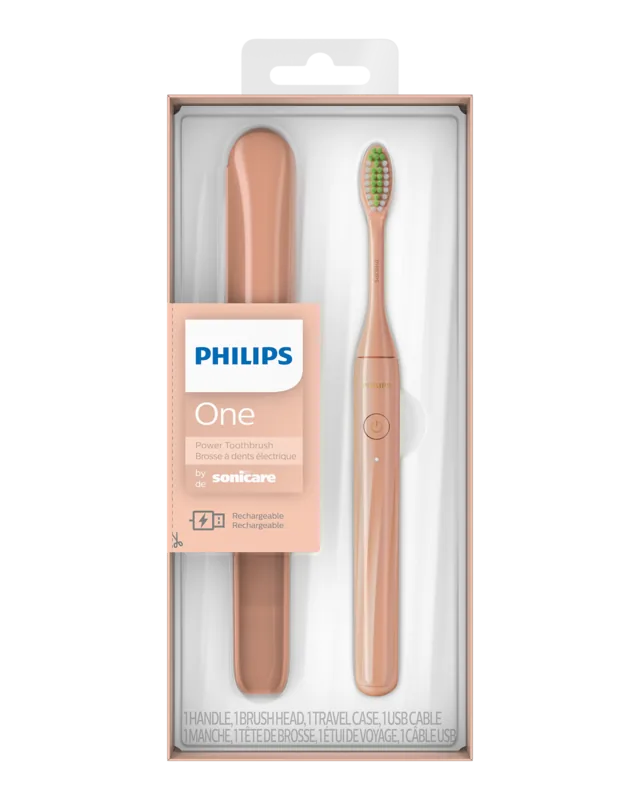
Etui, 1x tete de brosse (1x Philips One)

M: GO-GEM-FL-25

Description du Produit

Manuel Philips HY1200/05 One by Sonicare shimmer

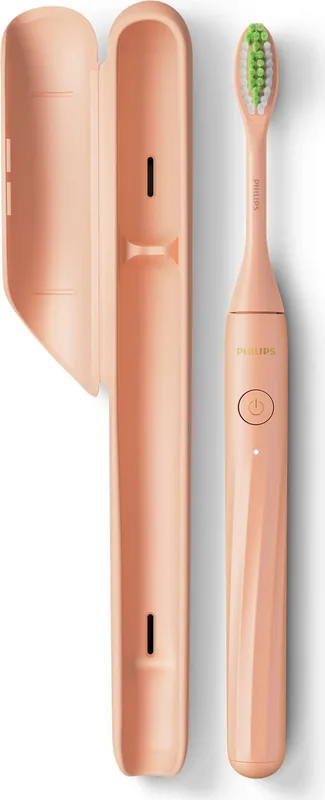
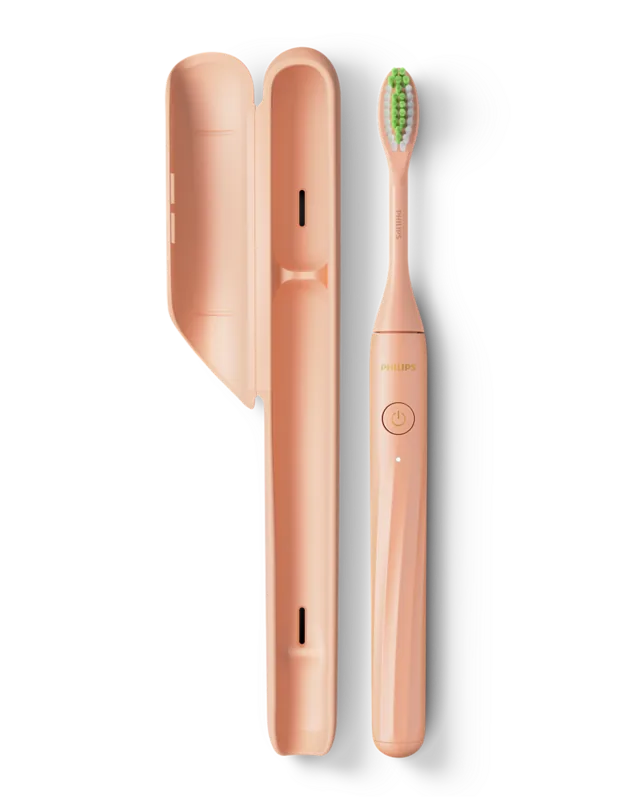
La Philips HY1200/05 One by Sonicare shimmer est une brosse à dents sonique compacte et prête pour les voyages, conçue pour les soins bucco-dentaires quotidiens. Légère et rechargeable par USB-C, elle combine un nettoyage par microvibrations avec des commandes simples et une commodité de voyage pour soutenir une routine de brossage fiable.

Conception et caractéristiques principales

La HY1200/05 présente une poignée fine, une tête de brosse amovible et un étui de voyage protecteur qui range la brosse avec les poils orientés vers le bas. Elle utilise des microvibrations pour nettoyer les dents en douceur et peut être utilisée en toute sécurité sur les appareils orthodontiques et les restaurations dentaires courantes lorsque ces restaurations sont stables.

La charge se fait via un câble USB-C (adaptateur secteur non inclus) et peut prendre jusqu'à huit heures pour une charge complète ; une charge complète fournit environ 60 séances de brossage de deux minutes. L'indicateur de batterie affiche l'état de charge et le niveau de charge restant, et l'appareil émet des bips pour confirmer la charge et les alertes de batterie faible.

Aides au brossage et technique

Philips One inclut un SmarTimer et un QuadPacer pour promouvoir les habitudes de brossage recommandées par les professionnels dentaires : un SmarTimer de 2 minutes qui signale la fin d'un cycle par trois bips, et un QuadPacer qui émet un bip toutes les 30 secondes pour inciter à une couverture uniforme des quatre zones de la bouche. Il est conseillé de tenir la brosse à un angle de 45 degrés, d'utiliser de doux mouvements d'avant en arrière et d'incliner verticalement pour les faces internes des dents de devant.

Sécurité, entretien et élimination de la batterie

Le manuel souligne des précautions de sécurité importantes : éviter l'immersion dans l'eau, ne pas charger à l'extérieur, garder le port USB sec et arrêter l'utilisation si l'appareil devient anormalement chaud, décoloré ou dégage une odeur. La batterie rechargeable NiMH interne n'est pas remplaçable mais peut être retirée pour recyclage en fin de vie en suivant la procédure pas à pas du manuel. Les utilisateurs sont invités à isoler les bornes de la batterie avec du ruban adhésif avant élimination et à suivre les consignes locales de recyclage.

Le nettoyage est simple : rincer la tête de brosse après chaque utilisation, retirer et rincer la zone de l'arbre métallique et la connexion de la tête de brosse chaque semaine, essuyer la poignée avec un chiffon humide et rincer l'étui de voyage chaque semaine. Seules les têtes de brosse Philips One sont compatibles ; remplacer les têtes tous les trois mois.

Garantie et assistance

Philips offre une garantie d'un an. Pour l'assistance, les utilisateurs peuvent contacter le support Philips ou enregistrer le produit en ligne. L'utilisation de pièces non autorisées peut annuler la couverture de la garantie.

Remarques

  • Utiliser uniquement le câble USB fourni et un adaptateur 5V USB Type-A (non inclus) pour la charge.
  • Ne pas nettoyer l'appareil ou les accessoires au lave-vaisselle, au micro-ondes, à l'eau bouillante ou avec des produits chimiques agressifs.
  • Consulter un professionnel dentaire en cas de chirurgie buccale récente, de saignements persistants ou d'implants médicaux.
M: OA-GPT-5-NAN

© Copyright 2026 Manual.ly